Open House Checklist: 45 Red Flags to Spot Before You Make an Offer
A practical open house checklist for spotting repair, layout, neighborhood, HOA, and cost red flags before making an offer.
An open house is designed to make a home look appealing. Lights are on, clutter is gone, music may be playing, and the best features are emphasized. Your job is to enjoy the tour while also looking for risk.
A red flag does not always mean “do not buy.” It means “slow down, investigate, price the risk, and protect yourself before making an offer.”
Quick answer
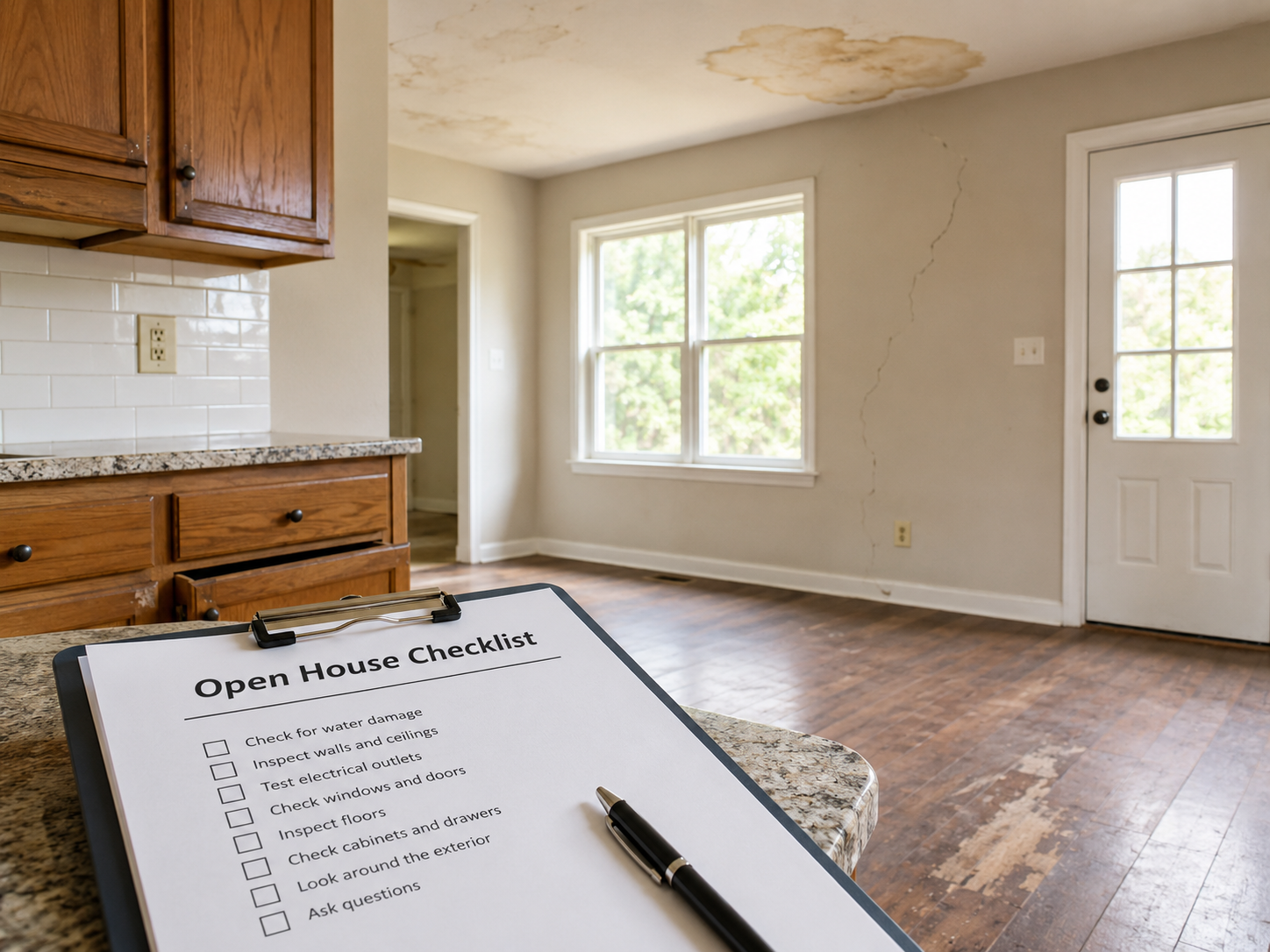
At an open house, buyers should look for signs of water damage, foundation movement, roof age, old mechanical systems, electrical concerns, plumbing issues, poor drainage, layout problems, noise, parking constraints, HOA risk, neighborhood concerns, and ownership costs that are not obvious in the listing photos.
The best open house checklist combines physical-condition clues with financial and lifestyle questions.
How to use this checklist
Use your phone to take notes immediately after the showing. Do not rely on memory after seeing several homes. Score each category as green, yellow, or red.
- Green: no obvious concern.
- Yellow: investigate during disclosure review or inspection.
- Red: may affect price, offer terms, inspection strategy, or whether you proceed.
Water and moisture red flags
Water is one of the most expensive problems to ignore.
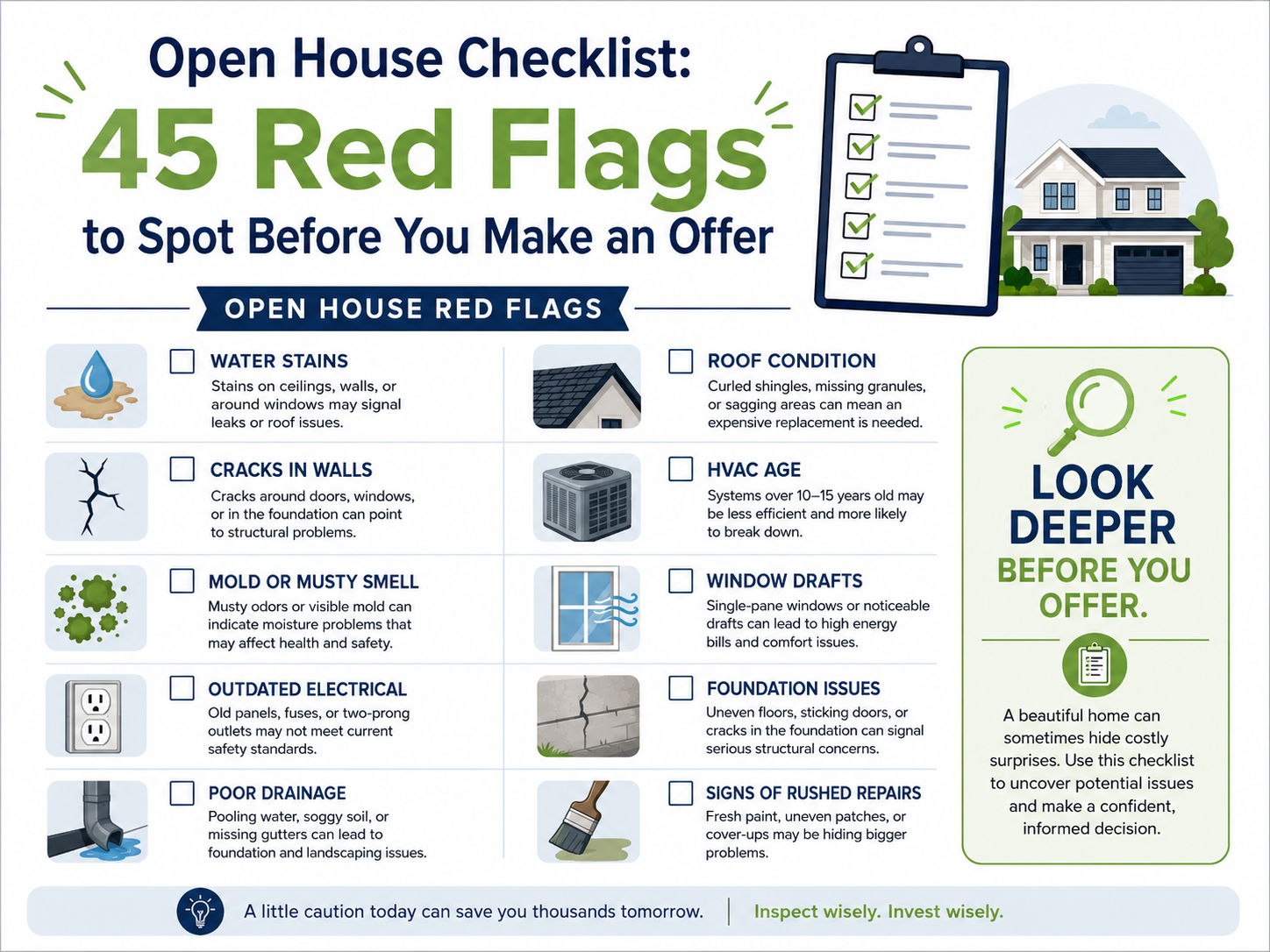
1. Musty smells. 2. Fresh paint only in one ceiling area. 3. Stains on ceilings or walls. 4. Soft or warped flooring. 5. Bubbling paint. 6. Mold-like discoloration. 7. Water marks under sinks. 8. Efflorescence or moisture in basement walls. 9. Poor drainage near foundation. 10. Downspouts dumping water next to the house.
Ask whether there have been roof leaks, plumbing leaks, drainage repairs, flood claims, or mold remediation. The answer matters, but the documentation matters more.
Foundation and structural red flags
Some cracks are normal. Others need professional review.
11. Large stair-step cracks in brick or block. 12. Doors that stick or do not latch. 13. Windows that do not open smoothly. 14. Sloping or bouncy floors. 15. Cracks wider than hairline in foundation or walls. 16. Gaps between walls and trim. 17. Uneven exterior settlement. 18. Recently patched structural areas without explanation.
Do not diagnose structure yourself. Use the red flag to decide whether you need a structural inspection or repair estimate.
Roof, HVAC, plumbing, and electrical red flags
Major systems drive first-year surprise costs.
19. Old roof or missing shingles. 20. Rusted or old water heater. 21. HVAC system near end of useful life. 22. Federal Pacific, Zinsco, or other problematic panel concerns. 23. Two-prong outlets in older homes. 24. Exposed wiring or overloaded outlets. 25. Low water pressure. 26. Slow drains. 27. Galvanized or outdated plumbing clues. 28. No service records for major systems.
Ask for ages, permits, warranties, invoices, and maintenance records. A system that works today can still be a near-term expense.
Layout and livability red flags
A home can be technically sound but hard to live in.
29. Bedrooms too small for normal furniture. 30. Awkward stairs or split levels that do not fit your household. 31. No practical place for work, storage, or laundry. 32. Poor natural light. 33. Kitchen layout that requires expensive changes. 34. Noisy bedrooms. 35. Limited parking. 36. Yard that is difficult to maintain. 37. Pet, accessibility, or aging-in-place problems.
Layout problems are expensive because they are often hard to change. A bad paint color is easy. A bad floor plan may not be.
Neighborhood and location red flags
The neighborhood is part of the property.
38. Busy road noise during normal hours. 39. Nearby commercial use that affects parking, smell, or noise. 40. Poor street drainage. 41. Difficult school, commute, or transit fit. 42. Limited guest parking. 43. Nearby neglected properties. 44. Planned construction you have not reviewed. 45. Safety or comfort concerns at different times of day.
Visit the area in the morning, evening, and weekend if possible. A quiet open house on Sunday afternoon may not represent Tuesday morning traffic.
HOA and condo red flags
If the home has an HOA, the open house is only the beginning.
Review:
- Monthly dues.
- Reserve study.
- Budget.
- Meeting minutes.
- Rental restrictions.
- Pet restrictions.
- Parking rules.
- Architectural rules.
- Litigation.
- Special assessments.
- Insurance coverage.
A low HOA fee is not always good. It may mean underfunded reserves.
Listing and seller behavior red flags
Pay attention to the story around the listing.
Multiple price cuts
This may indicate seller motivation or a property issue that buyers keep discovering.
Back on market
Ask why. Inspection issue? Financing issue? Appraisal issue? Buyer cold feet?
Limited disclosures
Disclosure rules vary, but missing information should make you ask more questions.
Strong pressure to waive protections
Competitive markets create pressure, but pressure is not a substitute for due diligence.
Financial red flags at an open house
Before making an offer, check the numbers:
- Estimated full monthly ownership cost.
- Property tax estimate after purchase.
- Insurance quote.
- HOA dues and assessment risk.
- Repair reserve.
- Estimated rent for comparable homes.
- Resale risk if selling in three to five years.
A beautiful home that stretches cash flow too far can become stressful quickly.
What to do after the open house
1. Write down your first impression. 2. List every red flag. 3. Estimate the full monthly cost. 4. Compare the home with two alternatives. 5. Review disclosures. 6. Decide whether to tour again privately. 7. If making an offer, adjust price and contingencies based on risk.
How Home Decision Lab helps
Use the Open House Checklist at Interactive Home Buyer Checklist to track red flags while touring. Before making an offer, run a Home Analysis Report at Home Analysis Report so the property can be evaluated beyond the listing photos.
FAQ
What should I look for at an open house?
Look for water damage, foundation signs, roof age, HVAC condition, electrical concerns, plumbing issues, layout problems, noise, parking, HOA risk, and full monthly cost.
Are open house red flags always deal breakers?
No. A red flag means you should investigate. Some issues can be fixed or priced into the offer. Others may justify walking away.
Should I bring a checklist to an open house?
Yes. A checklist helps you compare homes consistently and avoid forgetting important details after multiple tours.
What questions should I ask the agent at an open house?
Ask about age of major systems, seller disclosures, HOA dues, recent repairs, permits, offer deadline, days on market, price changes, and whether the property was previously under contract.
Can I inspect everything during an open house?
No. An open house is a first screen, not a full inspection. Use it to decide what needs professional review.
What is the biggest open house mistake buyers make?
The biggest mistake is focusing only on finishes and ignoring water, structure, systems, location, HOA risk, and monthly cost.
Data sources and assumptions used in this article
This article is educational and uses public market context plus example calculations. Numbers should be refreshed before publishing if Home Decision Lab has newer internal data.
- Freddie Mac Primary Mortgage Market Survey context: 30-year fixed-rate mortgage averaged 6.52% for the week reported June 11, 2026.
- FHFA House Price Index context: U.S. home prices were up 1.7% year over year in Q1 2026 and up 0.5% from Q4 2025.
- U.S. Census/ACS housing-cost framing: ownership cost includes more than the mortgage payment, including taxes, insurance, utilities, fees, and other required housing expenses.
- RentCast can be used for static data snapshots where available: rent estimates, value estimates, comps, property records, listings, and local market trend data. Do not expose an API key in public blog code.
Source URLs:
- https://www.globenewswire.com/news-release/2026/06/11/3310694/0/en/Mortgage-Rates-Average-6-52.html
- https://www.fhfa.gov/reports/house-price-index/2026/Q1
- https://www.census.gov/acs/www/about/why-we-ask-each-question/housing/
- https://www.census.gov/newsroom/press-releases/2025/acs-5-year-estimates.html
- https://developers.rentcast.io/reference/rent-estimate-long-term
- https://www.rentcast.io/api
Educational disclaimer
Home Decision Lab is an educational decision-support tool, not a lender, real estate broker, tax advisor, or financial advisor. This article should not be treated as personal financial, legal, lending, investment, or tax advice. Buyers and homeowners should confirm numbers with qualified professionals before making an offer, refinancing, selling, renting, or moving.
Educational only. This is not financial, legal, tax, mortgage, investment, or real estate advice.